July 7, 2025
Social housing: The shift that could reshape your local market.
How many calories do you think you consumed over the July 4 weekend? It’s probably nothing compared to Joey Chestnut and the rest of the competitive eaters who took the stage in Coney Island on Friday for the Nathan’s Hot Dog Eating Contest.
For reference, each dog and bun comes in at about 300 calories, so whether it’s Chestnut challenging his world record or the last place finisher fighting to keep it all down, chances are everyone on that stage downed at least 5,000 calories during the 10-minute contest.
This week we look at a possible weakening in the economy, Fourth of July spending habits, and how social housing can help combat housing affordability challenges.
Fuel up! 🚀


Bizz buzz
How much do Americans spend on July Fourth festivities?
Unsurprisingly, consumers tend to go all out for Fourth of July parties – from road trips for the long weekend to barbecues and fireworks, Independence Day is a big event for consumers.
- According to research from FinanceBuzz, Americans estimate spending an average of $170 on Fourth of July celebrations, from beer to food to fireworks to decor.
- Americans consume over 150 million hot dogs over the holiday, according to research from the National Hot Dog and Sausage Council.
- Data from the American Pyrotechnics Association shows that Americans spend $2.2 billion on Fourth of July fireworks. Roughly 27.5% of American consumers purchased fireworks last year to celebrate.
- AAA estimates that 72.2 million people will travel for the holiday – due in large part to the holiday falling on a Friday this year – eclipsing last year’s mark by 1.7 million people.
Payrolls decrease for the first time in over 2 years
ADP data released last week showed a 33,000 job contraction in private sector hiring in June. This marks the first time since March 2023 that the private sector has failed to add jobs. While economists were expecting an increase of about 100,000 jobs, ADP pins the disparity on “a hesitancy to hire and a reluctance to replace departing workers,” rather than a by-product of mass layoffs.
The major miss is unexpected, but with the S&P 500 back near record highs, non-farm payrolls expected to show an increase, and unemployment remaining steady at around 4%, there’s no need to hit the panic button.
Caffeinated Trends
A growing interest in social housing
As the conversation around housing affordability heats up across the U.S., the idea of “social housing” is getting more attention. But in New England, many of the core ideas behind social housing aren’t new.
Long-term affordability, community involvement, and mixed-income access are goals that local housing authorities, land trusts, and co-ops have been working toward for years.
A recent gathering hosted by the Joint Center for Housing Studies clearly demonstrated that the region’s existing efforts are laying the groundwork for something bigger.
Existing models that embody social housing principles
Many of the systems already in place are doing the work of social housing, even if they don’t always carry that label. Public housing agencies in cities like Boston and Cambridge are leading the way with thoughtful, long-term management of housing that stays affordable.
Meanwhile, groups like the Champlain Housing Trust in Vermont and Raise-Op Cooperative in Maine are showing how resident-led models can empower tenants and keep housing decisions rooted in the community. These programs take homes out of the speculative market and focus instead on stability, voice, and accessibility.
The challenge of scaling up
With rising housing costs affecting more people than ever, this shift is especially pertinent. While market-based solutions are struggling to meet demand, New England already has a head start.
Models that offer rent based on income or limit how much equity can be taken out of a sale are helping more people stay housed and plan for the future. These frameworks offer a middle ground between a high-cost market and limited-supply subsidized housing.
The next step is scaling these efforts. Some promising new funding models like Massachusetts' BILD initiative and East Boston CDC’s use of a Mixed-Income Neighborhood Trust show how public-private partnerships can make a difference without giving up community control.
Nevertheless, small organizations still face big funding challenges. In order to truly grow these solutions, more flexible, long-term investment that meets local needs and supports a broader range of housing types is crucial.

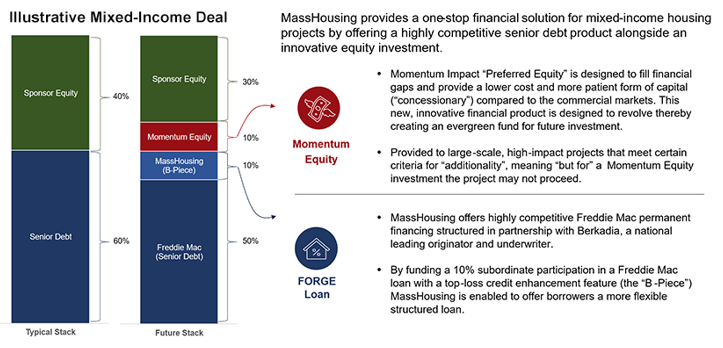
At its core, social housing isn’t a radical shift from where we are today. Rather, it’s a strategic evolution that leverages what already works. The goal isn’t to replace today’s affordable housing programs, but to strengthen and expand them. By recognizing the success of existing efforts, New England offers a hopeful vision of homes that are affordable, inclusive, and built to last.
Rocket Pro on the Road
Purchase season is here. Stay prepared by engaging with industry leaders and discovering what’s next. We’ll be at these top events – let’s connect.
· July 10: Ultimate Mortgage Expo – New Orleans, LA (Free registration with code RocketFree)
· July 17: Arizona Mortgage Expo – Chandler, AZ (Free registration with code RocketFree)
Pro Puzzles
We closed out the first half of the year with a tough puzzle last week! Only one solver managed to complete it in under a minute – congrats to the solver with our top time of 44 seconds!
2 Rockets