December 8, 2025
Market momentum for 2026: Rates, prices, and activity
Most Americans find holiday hosting joyful, but only for about 6 days. According to a survey by Talker Research, after those 6 days, about a third of hosts begin dropping hints that it’s time for guests to pack up, while 1 in 5 just outright say it! The desire to host may be strong, but the reality of small spaces, limited guest rooms, and the stress of extra people in your daily routine is strong too.
This week, we explore 2026 housing market predictions, reflect on recent housing trends, and monitor labor market momentum.
Fuel up! 🚀


Bizz Buzz
Redfin 2026 housing market predictions
Redfin recently predicted that 2026 will kick off a slow “Great Housing Reset” with affordability improving as wages finally outpace home-price growth.
These 2026 predictions span from mortgage rates dipping in the low 6% range and home prices rising modestly to existing-home sales rising slightly and rents increasing by 2 – 3% as apartment demand outpaces supply.
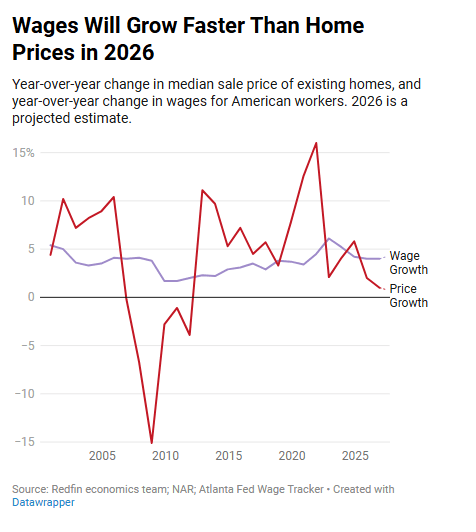
Redfin also touches on varying regional trends, with NYC suburbs and parts of the Midwest expected to heat up. Meanwhile, policymakers and industry players will likely experiment with reforms such as zoning updates and AI-powered home-search tools.
All in all, while many Gen Zers and young families will continue to face challenges with affordability, 2026 looks poised to offer some relief for prospective home buyers.
October pending home sales
Per the National Association of REALTORS®(NAR), pending home sales increased 1.9% month over month in October, driven by strength in the Midwest, South, and Northeast, though the West saw declines.
Year over year, sales fell slightly by 0.4%, reflecting ongoing affordability challenges in pricier markets. NAR Chief Economist Lawrence Yun noted that better affordability in the Midwest supported contract activity, while the West lagged. These modest gains support Redfin’s forecast for a gradual housing reset in the coming year, where slowly improving affordability may encourage more buyers to reenter the market while high-cost regions will continue to feel pressure.
Home prices continued to cool in September
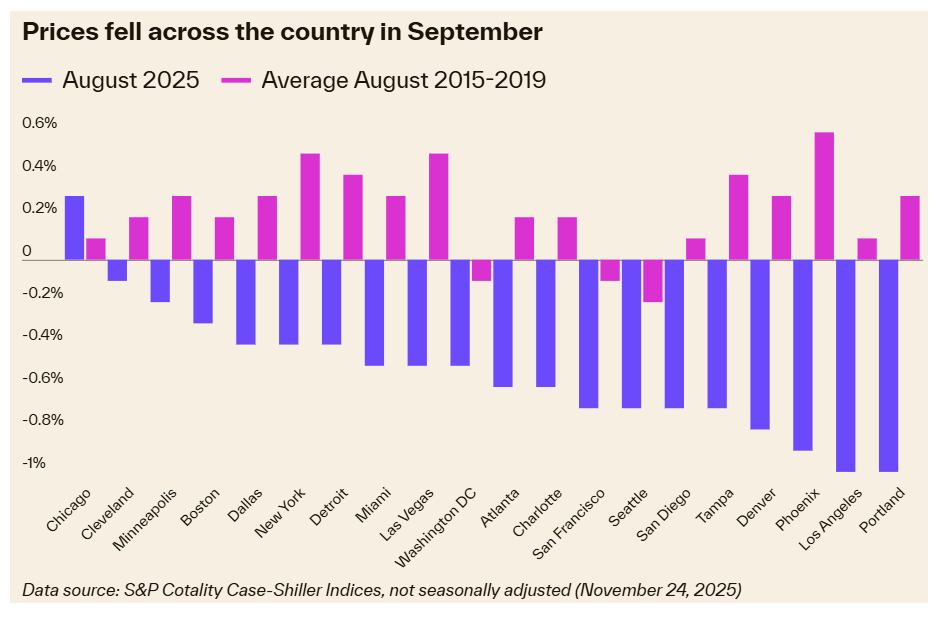
Home prices across most U.S. metro areas fell in September, marking the eighth straight month of slowed annual growth, with the S&P Cotality Case-Shiller Index showing national gains of just 1.3%. Monthly declines averaged -0.6% across all price tiers, reflecting a market where sellers are preserving their equity while buyers are remaining cautious. Only a handful of metros, including New York, Chicago, and Boston, saw modest price growth.
Zillow removes climate risk data from listings
Zillow has stopped displaying flood, fire, and other climate risk scores directly on home listings, a feature they added only last year, though a link to external data is still available. Research shows that visible risk scores significantly influence buyer behavior, with higher-risk homes often overlooked when the information is presented front and center.
Real estate agents warn that removing this data may leave buyers less informed about potential hazards, forcing them to seek out information independently. This shift highlights the growing role of climate risk in housing decisions, reflecting broader trends of local climate migration and evolving buyer priorities.
Caffeinated Trends
Concerns about the labor market have been building for months, and an unexpected drop in private payrolls in November has added to those worries.
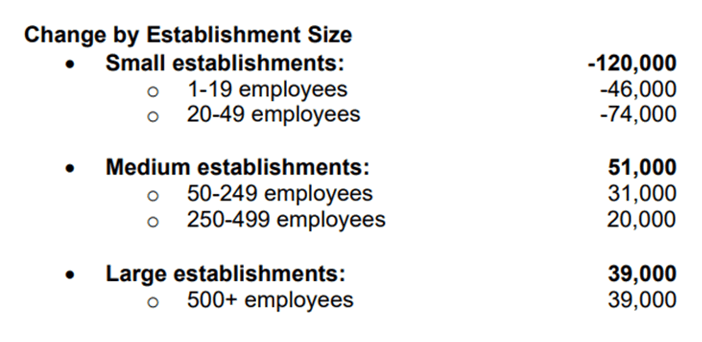
According to the ADP National Employment Report, private sector employment fell by 32,000 in November. Economists were predicting a modest gain following a strong October, when payrolls rose by 47,000. The decline was broad based, but “was led by a pullback among small businesses” according to ADP’s chief economist, suggesting that firms may be scaling back.
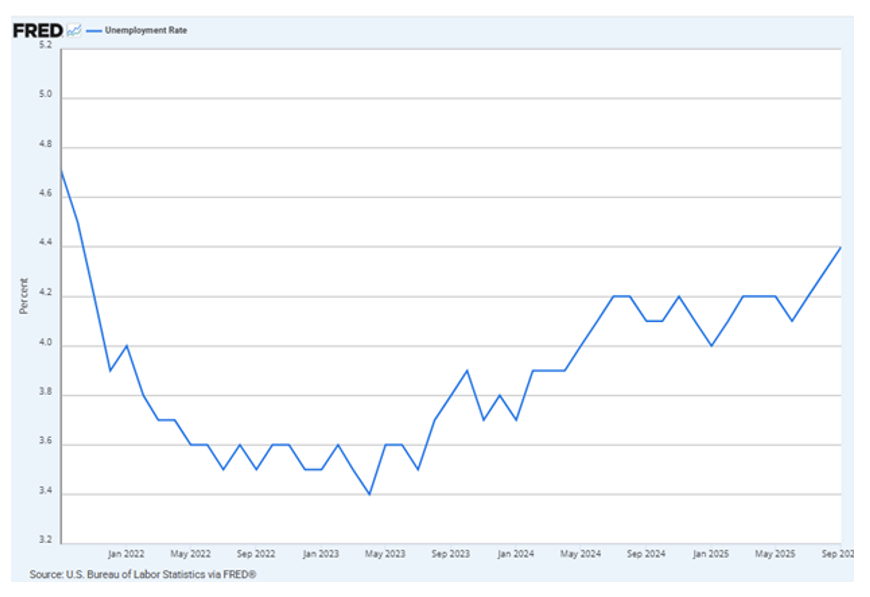
Private payrolls are not the only indication that the labor market may be losing momentum. After a lengthy government shutdown delayed reporting, the September unemployment rate was finally released and showed a slight increase to 4.4%. This is the highest unemployment rate since October 2021. The number of unemployed individuals rose to 7.6 million, over 500,000 higher than the same time last year, reflecting a labor market that is weakening.
The current environment has been described as “low hire, low fire” meaning employers are holding onto existing workers but not adding new ones. This leaves job seekers facing a tougher landscape with limited job openings. College graduates are being particularly hard hit with their unemployment rate reaching 9.5% in September, an increase from 6.8% a year earlier. The slowdown in hiring combined with increased competition for entry-level roles is making it difficult for graduates to enter the workforce.
The Federal Reserve now faces a difficult decision. Because of the shutdown, the committee will enter their December 9 – 10 meeting without all the data at their disposal. While inflation continues to linger, the labor market continues to deteriorate. The committee will have to weigh whether the threat of further weakness in employment should take precedence over inflation concerns.
Most of our solvers finished in less than 2 minutes on last week’s Thanksgiving puzzle. Our top time was just 22 seconds!
2 Rockets