December 15, 2025
FHA refi spike signals big opportunities for brokers
Hot chocolate and gingerbread cookies go perfectly with the holiday season. But you know what doesn’t go well with the holidays? A polar vortex. This weekend and into early next week, some of the coldest temperatures across the globe will hit the central and eastern U.S.
While we’re out here fighting the frost to stay festive, the housing market is having its own seasonal drama, from Fed cuts and refi surges to trends in climate risk searches. Here’s what’s warming up the week.
Fuel up! 🚀

-700x700.webp&w=1290&q=100)
Bizz Buzz
Fed cuts again, puts jobs ahead of jitters
The Fed wrapped up its December meeting with a third straight quarter-point rate cut, taking the federal funds target range down to 3.5% – 3.75%, the lowest since late 2022.
Policymakers framed the move as “insurance” for a cooling job market, even as inflation remains above the 2% goal.
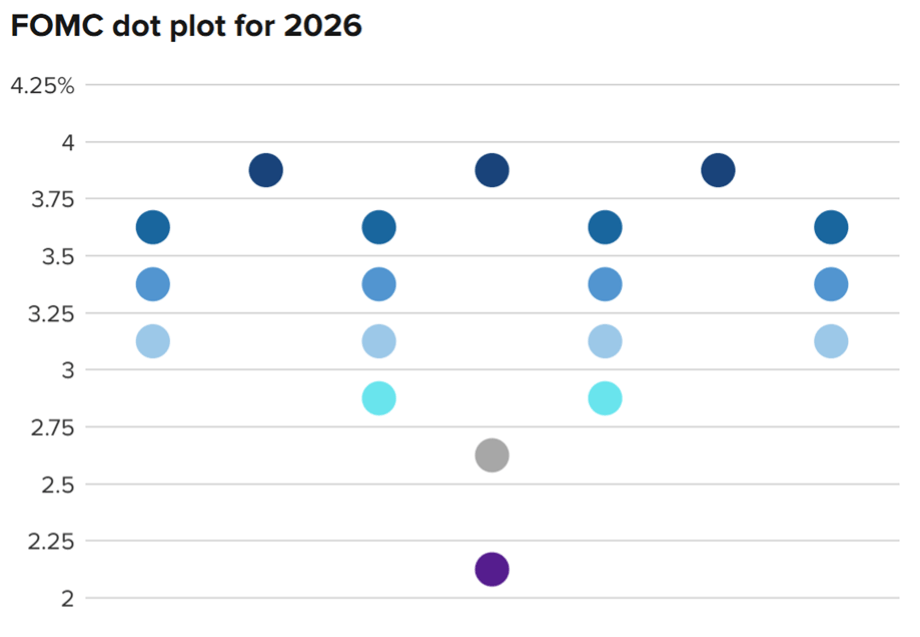
The central bank’s dot plot, which anonymously shows the expectations of 19 individual members, indicates a median estimate of 3.4% for the federal funds rate at the end of 2026. This is a quarter point lower than the current range of 3.5% – 3.75% and is less aggressive than the market had anticipated.
The big takeaway for housing: Borrowing costs are drifting lower, but the Fed is clearly not opening the floodgates.

Refinance demand for FHA loans takes a jump and a half
Refinance demand for FHA loans rose 24% last week, the sharpest rise across all mortgage products, as borrowers rushed to lock in the lowest FHA rates in over a year amid easing Treasury yields.
Overall refi applications climbed 14%, nearly double the levels seen a year ago. The Mortgage Bankers Association noted that FHA borrowers are especially rate-sensitive and quick to move when affordability improves.
As a result, refinances now account for 58.2% of total mortgage activity, indicating that many homeowners are opting to restructure their loans rather than sell in a tight, high-priced housing market.
Disasters spike climate-risk searches, but only briefly
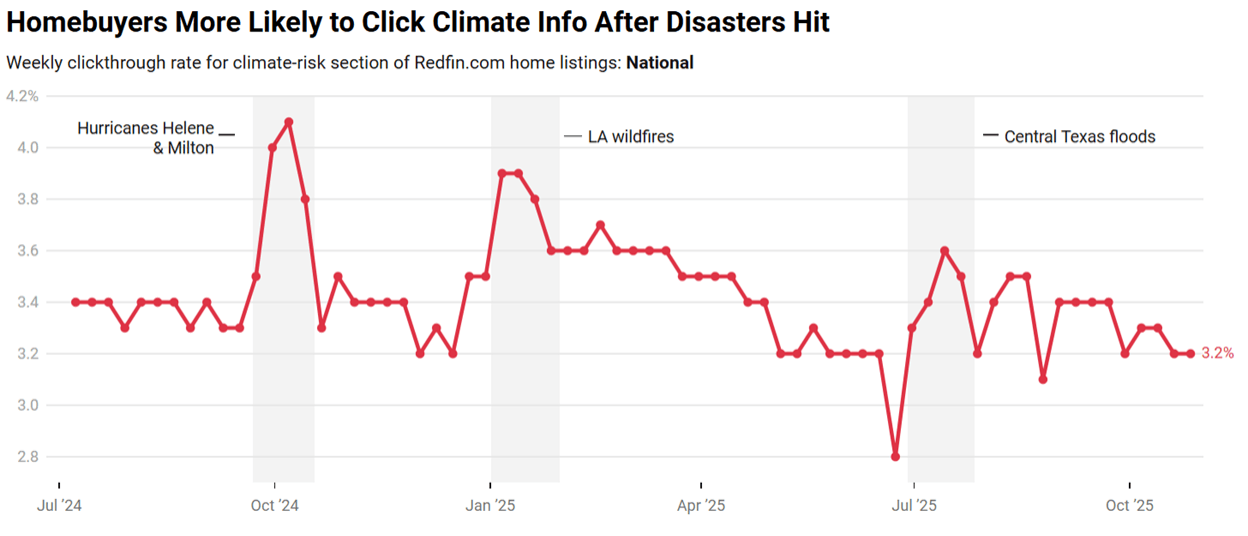
Home buyer interest in climate-risk data spikes sharply right after disasters – then quickly fades. In the wake of the 2025 wildfires in Los Angeles, clicks into the “Climate Risk” section of Redfin listings rose from a 4.2% baseline to a peak of 7.8%, before drifting back over the following months. The same pattern played out after hurricanes in Florida, showing that while natural disasters grab attention, that urgency doesn’t stick.

Caffeinated Trends
The changing shape of household finance
In recent years, the U.S. financial system has undergone a quiet but significant transition. From the rising presence of digital assets to the government’s growing involvement in bank liquidity, consumers are encountering a landscape where traditional banking, fintech, and crypto coexist in new and occasionally confusing ways. While these shifts can feel abstract, they ultimately influence how households manage money, make financial decisions, and prepare for milestones such as buying a home.
A clear example of this evolution is the Federal Reserve’s expanding use of the Overnight Reverse Repo Facility (ON RRP), which has played a critical role in stabilizing short-term funding markets since 2020. By allowing financial institutions to temporarily exchange cash for securities, the ON RRP has acted as a buffer during periods of volatility. However, it has also blurred the lines between public and private sector liquidity. At the same time, fintech competitors and money-market funds have grown rapidly, offering consumers more options outside of traditional banks and prompting questions about where people feel safest holding their savings.
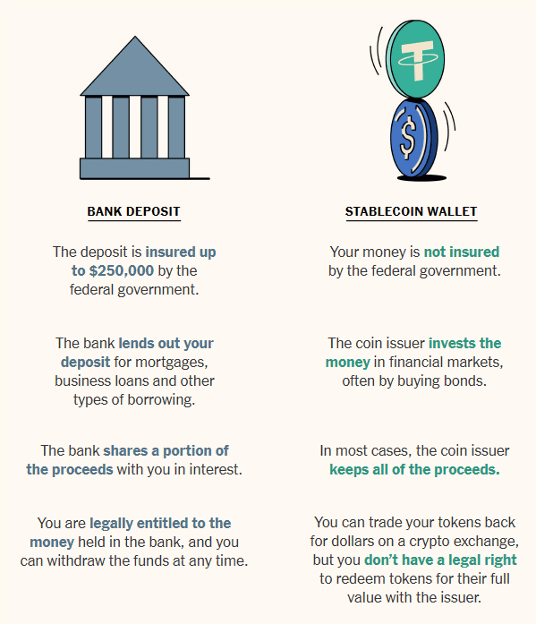
Adding to all of this is the steady mainstreaming of digital assets. After many years of skepticism, cryptocurrencies are becoming increasingly integrated into traditional financial products, including brokerage platforms and retirement accounts. They are also being explored by younger customers as alternative stores of value. This shift comes with its own opportunities and challenges: Digital assets appeal to consumers who are seeking higher returns or diversification, but they remain unevenly regulated and protection standards lag behind those for bank deposits or conventional investment.

For real estate professionals and financial partners, these changes have direct implications. Buyers may be arriving with more diversified portfolios, nontraditional sources of down payment funds, or questions about how digital assets can (or cannot) be incorporated into the home buying process. Meanwhile, households navigating a more complex financial ecosystem may lean more heavily on trusted advisors for clarity, whether in understanding how rising yields affect mortgage rates or how liquidity shifts influence borrowing costs.
As the financial system continues to evolve, one constant remains: Consumers need stability, transparency, and guidance. While innovation brings new and exciting possibilities, it also highlights the importance of clear communication and responsible financial practices across the industry. By keeping up with these broader changes, households can be better supported in making confident, informed decisions regardless of how the economic landscape continues to change.
We had some great times on last week’s puzzle! Over 30% of solvers finished in under a minute, led by two who finished in under 20 seconds! Hats off to our two fastest solvers, who came in at 14 and 17 seconds.
2 Rockets